
Introduction
Guide to Digital Marketing. Digital marketing has transformed the way businesses connect with customers. Instead of relying only on traditional advertising methods like newspapers, television, or billboards, businesses can now reach their target audience through online platforms. Whether you’re a startup, freelancer, or established business owner, understanding digital marketing is essential for building brand awareness, generating leads, and increasing sales.
What is Digital Marketing?
Digital marketing is the practice of promoting products, services, or brands using digital channels such as search engines, websites, social media platforms, email, and online advertisements. Unlike traditional marketing, digital marketing allows businesses to target specific audiences, monitor campaign performance, and make data-driven improvements. As more people spend time online, having a strong digital presence has become a necessity rather than an option.
Types of Digital Marketing
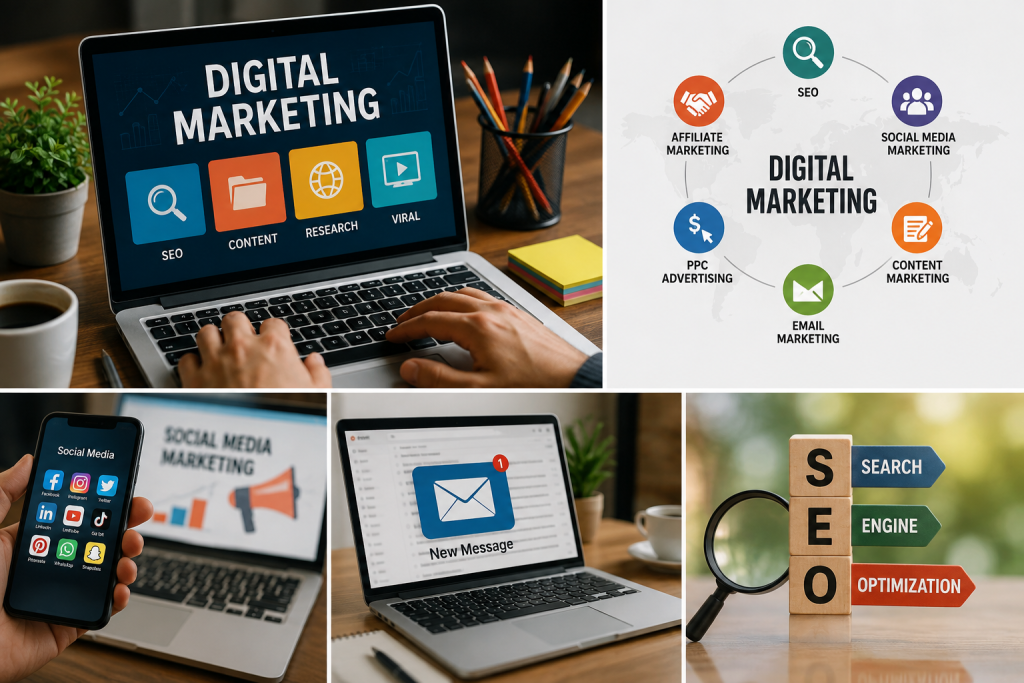
There are several key areas of digital marketing that work together to create a successful online strategy. Search Engine Optimization (SEO) improves a website’s visibility in search engine results, helping businesses attract organic traffic. Social Media Marketing focuses on engaging audiences through platforms like Facebook, Instagram, LinkedIn, and X. Content Marketing involves creating valuable blogs, videos, and guides that educate and inform potential customers. Email Marketing helps businesses build lasting relationships through personalized messages and newsletters. Pay-Per-Click (PPC) Advertising generates instant traffic by displaying paid ads on search engines and social platforms, while Affiliate Marketing allows businesses to grow through partnerships with individuals or companies that promote their products.
Benefits of Digital Marketing
One of the greatest advantages of digital marketing is its cost-effectiveness compared to traditional advertising. It enables businesses to reach customers across the globe while targeting specific demographics based on age, interests, or location. Digital marketing also provides measurable results through analytics, allowing businesses to track website traffic, conversions, and customer engagement. These insights help improve marketing strategies and maximize return on investment.
Essential Digital Marketing Tools
Using the right tools can make digital marketing more effective and efficient. Google Analytics helps monitor website traffic and user behavior, while Google Search Console provides insights into search performance and website health. Canva makes it easy to create professional graphics, and Meta Business Suite simplifies managing Facebook and Instagram content. AI tools like ChatGPT assist with content creation and idea generation, while email marketing platforms such as Mailchimp help automate campaigns and nurture customer relationships.
Beginner’s Step-by-Step Plan
If you’re new to digital marketing, start by defining clear business goals and identifying your target audience. Build a professional, mobile-friendly website that reflects your brand. Create high-quality content that addresses your audience’s needs and share it consistently across social media platforms. Finally, monitor your performance using analytics tools and refine your strategy based on the results to achieve continuous improvement.
Conclusion
Digital marketing is more than promoting products or services—it’s about building trust, creating value, and developing meaningful relationships with your audience. By learning the fundamentals and applying the right strategies, beginners can establish a strong online presence and achieve sustainable business growth in today’s competitive digital world.